Welcome to IWMI South Asia
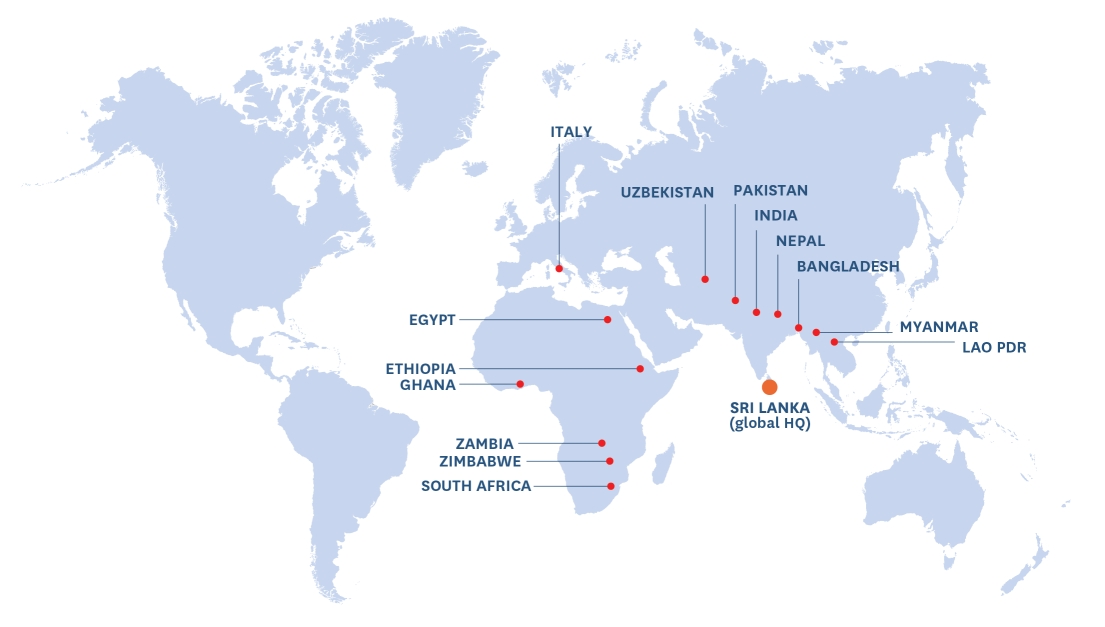
In the South Asia sub-region, has offices in India (Hyderabad and Delhi), Pakistan (Lahore) and Nepal (Katmandu), and has on-going activities in Bangladesh. IWMI's sub-regional office for South Asia is based at the ICRISAT campus in Hyderabad, India.
The economic growth in the region in recent years has presented opportunities for improving the productivity of the water and land resources and reducing poverty, yet it also presents challenges to ensure that the demand for these resources does not further impact the poor and the environment. While the proportion of the population living in rural areas in South Asia is expected to decline, the absolute number is projected to continue to increase.
IWMI's benchmark basin in the sub-region is the Krishna, but activities have also focused on the Indo-Gangetic plain. Within the Krishna basin, IWMI implements a number of interrelated activities aimed at improving water productivity, and reducing water and land poverty. IWMI is also mapping the water-land-poverty nexus in the lower Krishna basin to identify and locate the poor within the basin, and study possible linkages between poverty and access to water and land. IWMI research shows that around 88 per cent of the Indian population lives in basins with some form of water scarcity or food production deficit, and that an increasing population and growing economy will further challenge the demands on the resource.
With the goal of developing country-specific mitigation options, IWMI is conducting research on wastewater irrigation in India (Hyderabad), Pakistan (Faislebad), and Nepal (Kathmandu) to determine the risks and benefits of this expanding practice in the sub-region. The Institute is also looking at the challenges associated with groundwater and the implications of the water-energy nexus.
Download South Asia Brochure (578KB)
There are 14 researchers working in South Asia assisted by research support staff.